In a major boost for aspiring homeowners in Queensland, the Palaszczuk Government made a ground-breaking announcement on Sunday, 19 November 2023. The much-celebrated news revealed that the First Homeowner Grant would be doubled to an impressive $30,000. This significant change came into effect immediately on Monday, 20 November, and will remain in place until 20 June 2025.
Let’s delve into the details of this exciting development and what it means for first home buyers in the Sunshine State.
This enhanced First Homeowner Grant is not only a financial incentive but also a catalyst for the Queensland property market. With the extended timeframe until 20 June 2025, first home buyers have a unique opportunity to explore the market, secure their dream homes, and make the most of the doubled grant.
Benefits for Aspiring Homeowners:
The doubled grant provides substantial financial relief for those embarking on their first home buying journey. It serves as a powerful tool to mitigate the challenges associated with entering the property market, making homeownership more accessible and achievable for many Queensland residents.
If you’re considering taking advantage of this fantastic opportunity, now is the time to contact Go Mortgage. We can be your partner in this financial journey and find you the best deal! Go Mortgage offers the tools and support throughout your journey to getting into your home.
Financial Assessment
This is where we will look at your unique situation and help you understand how much you can afford to borrow and what your budget allows for.
We also look at ALL the incentives you qualify for as a First Home buyer and help you collect as much as possible. Do you qualify for:
– The First Home Super Saver Scheme = Use your Super
Access to Multiple Lenders
We have access to a wide network of lenders, including major banks, credit unions, and other financial institutions. This allows us to ‘shop’ around for the best mortgage rates and terms tailored to you.
Loan Comparison
We will compare different loan products from the various lenders and present you with a clear understanding of the options available. This includes fixed-rate mortgages, variable-rate mortgages, and other specialised products.
Guidance Through the Application Process
This can be very complex, but we do it every day! We can navigate the mortgage application process for you, guiding you through each step, ensuring that all necessary documentation is prepared and submitted correctly. This can save a lot of time and potential heartache for you.
Negotiation on Your Behalf
Go Mortgage will negotiate with lenders on your behalf, seeking favourable terms, lower interest rates, or other concessions that may benefit you.
Understanding Loan Types
We will explain the different types of loans available, and help you choose the one that aligns with your financial goals.
Pre-Approval Assistance
Getting pre-approved for a mortgage is a crucial step in the home-buying process. We will get this for you, and it will arm you with the right information to find a property that is achievable for you, without wasting precious time looking at a location or a budget that may not be realistic.
Explanation of Fees and Charges
Go Mortgage will break down the various fees and charges associated with obtaining a mortgage and make sure you understand the financial implications of your loan.
Ongoing Support
We are with you from go to whoa 😉! Another resource that you will find handy is our First Home Buyer Handbook. Download it from the website today.
Go Mortgage will provide ongoing support, answer questions, address concerns, and help you navigate any challenges that may arise along the way and then into the future.
In summary, Go Mortgage is your partner in your financial journey and will be your knowledgeable guide throughout the home-buying process to ensure you have made an informed decisions that align with your financial goals.
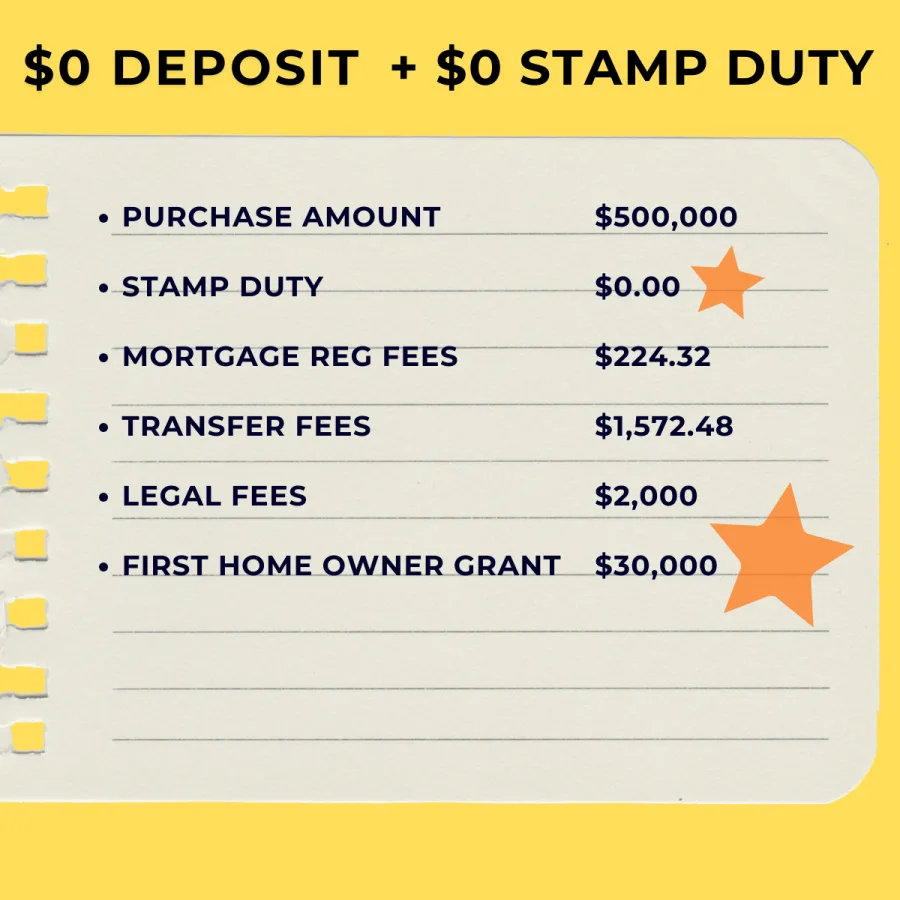
Below are some examples that may be useful to you when looking at different property prices and your savings.
Scenario 1:
Scenario 2:
If you would like to read more of the talk around the grants, read the Urban Developer Article here.
Will Your Credit Score Stop You From Getting A Loan?
Your credit score is a financial fingerprint that you might not think about until you’re ready to borrow money, however, it plays a critical role in determining how much you can borrow from the bank. Here we will help to unravel the mysteries of credit scores and explain their impact on your borrowing capacity.
Step One: What Is a Credit Score 💳 ?
A credit score is a three-digit number that reflects your creditworthiness. In Australia, credit scores typically range from 0 to 1,200. The higher the score, the better your credit health. There are three companies in Australia where you can obtain your credit score, for free, once every three months. It is a good idea to do this at least once a year to keep your finger on the pulse of your financial success.
Get your credit score from any of the businesses below:
When it comes to assessing a loan application, the main credit score source the banks use is Equifax.
At Go Mortgage, we leave no stone unturned in our mission to secure the best loan options for you. That’s why, when your dedicated broker assesses your loan, they meticulously examine your credit file. It’s our way of ensuring that every aspect of your financial journey is optimized.
We believe in transparency, trust, and, most importantly, empowering you with the information you need to make the best financial decisions. So, rest assured, we’ve got your back!
Step Two: Why Does Your Credit Score Matter?
Determines Lender’s Trust: Lenders use your credit score to assess the level of risk associated with lending to you. A higher score indicates responsible financial behaviour, while a lower score may raise concerns.
Interest Rates: Your credit score often influences which lender may consider your application, which can then determine the interest rate offered. A worse score can push you into a non-conforming or specialist lender with a higher rate, potentially costing you thousands of dollars in interest.
Loan Approval: Some home loans or banks may have minimum credit score requirements. A low score could lead to loan rejection, while a higher score improves your chances of approval.
Your credit score is a powerful financial tool that shapes your borrowing potential. It affects the amount you can borrow, the interest rates you’re offered, and even your loan approval chances. Maintaining a healthy credit score requires responsible financial habits, such as paying bills on time and reducing debt. By understanding the link between your credit score and borrowing potential, you can make informed financial decisions that set you on the path to achieving your goals.
Our Tip: Don’t panic if your credit score is not so great 🤨. We outline some simple strategies below to improve your credit score.
Improving Your Credit Score
Make On Time Payments: Pay your loans late and this will be recorded on your credit file, negatively impacting your credit score. By making payments on time, you ensure your credit score is nurtured and preserved.
Reduce Your Debt: Lowering credit card balances and paying off outstanding loans can have a positive impact on your credit score.
Review Your Credit Report: Regularly review your credit report for inaccuracies and dispute any errors you find.
Use Credit Responsibly: Avoid opening multiple new accounts at once and apply for credit only when necessary. Regular and multiple applications for credit can negatively impact your credit score: especially for things like BuyNowPayLater (Afterpay, ZipPay, etc) pay day lenders, personal loans, and credit cards.
Maintain Older Accounts: The length of your credit history can influence your score, so keeping older accounts open can be beneficial.
Have A Budget: A powerful tool in your own arsenal is budgeting. Our simple budget planner will help get you started and give you a picture of your financial position.
If you want to talk to us about the health of your credit file and your loan options, simply click to get in touch or call call 1300 855 244.
Unlocking Financial Opportunities Is Your Hidden Financial Super Power: The What, Why, and How of Refinancing Your Home Loan
Are you a homeowner eager to make the most of your mortgage? If so, refinancing your home loan could be your ticket to financial freedom. Here we will walk you through the essentials of refinancing, explain what it is, why you might consider it, and how to make it work for you.
Understanding Refinancing: The What
Refinancing involves taking out a new home loan to pay off your existing one. The primary goal is to secure a more favourable loan, whether that means: Lower interest rates Better terms Or a loan that suits your evolving needs.
Why Refinance: The Motivation
The decision to refinance should align with your financial goals. This isn’t just about numbers; it’s about finding a loan that complements your unique needs.
Lower Monthly Payments: If you’re aiming to reduce your monthly mortgage payments, refinancing can make it happen.
Shorten Your Loan Term: Perhaps you want to pay off your mortgage sooner. Refinancing can help you achieve this by selecting a more functional loan than enables extra repayments and can see your loan paid off sooner.
Access Home Equity: If your property’s value has increased, tapping into your home’s equity through refinancing can provide funds for renovations, buying an investment property, or other financial goals. To dive deeper into unlocking the potential of your home’s equity, explore our blog: Beginner’s Guide To Accessing Equity From Property.
Optimised Loan Features: Find a loan with features that better suit your financial objectives, whether it’s flexible payment schedules, lower interest rates, smarter budgeting, or specific loan features.
Considering the Costs: Is It Worth It?
Refinancing isn’t without costs, including discharge fees, application fees, and potential differences in interest rates. To determine if it’s worth the investment, we can go through the options with you. We will guide you through the complexities, ensuring your decision aligns with your unique situation.
You can quickly get a road snapshot of your refinancing outcomes by clicking to our loan comparison calculator.
Choosing a Lender and Crafting a Plan: The How
Your search is about more than just finding a low-interest rate. We will assess your entire financial situation and help you create a practical plan that fits your needs. This process becomes less complex and more enjoyable, saving you both money and headaches in the long run.
How Long will the Refinancing Process Take: Timing
The timeline for home loan refinancing varies depending on the bank or lender, with processes ranging from just a few days to as long as six weeks.
The Final Steps: Settling and Saving
Congratulations! You’ve reached the end of your refinancing journey, and it’s time to settle and enjoy your newfound savings.
Don’t forget, we also offer an annual review to ensure your home loan remains the best fit for your evolving needs. We are here to ensure your financial success!
So, if the idea of saving money, creating a solid financial plan, and having a knowledgeable broker on your side appeals to you, it’s time to take action.
If you want to talk to us about your loan simply click here to get in touch or call 1300 855 244.
When it’s time to purchase a home or refinance an existing property, finding the right home loan is crucial. With so many lenders to choose from, it’s hard to decide which one is the best fit for your needs. That’s where a mortgage broker comes in, but the broker you work with matters just as much as the loan.
Knowing how to choose a mortgage broker comes down to a handful of checks you can make before you hand over your payslips. Below are eight things that separate a good broker from a great one.
For most borrowers, yes. A mortgage broker compares loans across multiple lenders, handles the paperwork and negotiates on your behalf, which can save you time and money.
Brokers are also legally required to act in your best interests when recommending a loan – unlike bank branches and mobile bankers. This is especially helpful for first home buyers or those with more complex financial circumstances, as different banks & lenders can assess the same application differently. If you’re still wondering whether it’s worth using a mortgage broker, our guide to mortgage brokers vs banks explains the differences in more detail.
1. They hold the right licence and memberships
Every broker in Australia must hold an Australian Credit Licence or be an authorised credit representative under someone else’s licence. You can verify either on ASIC’s professional registers.
It’s also worth looking for membership of an industry body such as the Mortgage & Finance Association of Australia (MFAA) or the Finance Brokers Association of Australia (FBAA), which set education and conduct standards, and of the Australian Financial Complaints Authority (AFCA), the external dispute resolution scheme you can turn to if something goes wrong. If you can’t find a broker’s name or licence number on the register, keep looking.
At Go Mortgage, we hold our own Australian Credit Licence 376838 and are a member of the MFAA, the FBAA and AFCA.
2. They have access to a wide lender panel
A broker can only recommend loans from the lenders on their panel. A wider panel means more choice, including smaller lenders and specialist lenders that may offer sharper rates or more flexible policies than the big banks. Ask how many lenders they work with and whether they regularly use a range of them, rather than sending most clients to the same two or three. A broker who leans heavily on one lender may be choosing convenience over your best outcome.
At Go Mortgage, we have access to a panel of 65+ banks & lenders.
3. They’re upfront about how they’re paid
So, how do mortgage brokers get paid? In most cases, the lender pays the broker an upfront commission when your loan settles, plus an ongoing trail commission while the loan stays active. That’s why we offer our home loan services at no cost. A good broker will explain this clearly and provide a credit guide disclosing their commissions. If a broker is vague about payment, treat it as a red flag.
Some brokers also charge a fee for complex loans, or pass on a commission clawback if you refinance or pay out the loan within the first year or two. Brokers are legally required to disclose any commissions or extra fees, so ask about it before you sign anything.
At Go Mortgage, our brokers are paid the same irrespective of which lender is recommended.
4. They have a proven track record
Experience counts. A broker who has been in the industry for years will have dealt with a wide range of borrower situations, developed strong relationships with lenders and built a deep understanding of the mortgage market. As a result, they’re better placed to find suitable loan options and terms for your specific situation, and to anticipate problems before they hold up your approval. Ask how long they’ve been working as brokers and what kinds of loans make up most of their work.
5. Their clients leave strong reviews
Reviews are another essential consideration when choosing a mortgage broker. Look beyond the star rating and read what clients actually say. The most useful reviews mention professionalism, responsiveness and the broker’s ability to secure finance in challenging circumstances, such as a tight settlement deadline or a declined application elsewhere.
Check a few sources, such as Google and independent review sites, and notice how the broker responds when a client isn’t happy. A considered reply to a negative review often says more than a wall of five-star ratings.
6. Their work has been recognised by the industry
Awards and recognition are another useful indicator of a broker’s quality. Industry awards from bodies such as the MFAA, the Australian Mortgage Awards and the Better Business Awards are generally judged on factors like customer satisfaction, service and business practices. An award isn’t everything, but consistent recognition over several years suggests a broker who delivers.
It’s also worth looking at the recognition a brokerage has received directly. At Go Mortgage, we’re proud of the industry recognition we’ve achieved over the years. You can explore our awards and recognition to learn more about our achievements and the standards we strive to uphold.
An award isn’t everything, but consistent industry recognition can provide additional reassurance that you’re choosing a broker with a proven commitment to quality service.
7. They understand your type of loan
Not all mortgages are the same. Some property buyers require specific borrowing products, such as first home buyer loans, investment property loans, Low Doc loans or construction finance. A great mortgage broker should have expertise in these specialised areas and an understanding of what each lender looks for.
This matters most if your situation is less straightforward. For example, if you run your own business, look for a mortgage broker for self-employed borrowers who knows which lenders accept alternative income documents. Investors building a portfolio, meanwhile, need a broker who understands loan structuring, so one property doesn’t limit their ability to buy the next.
8. They explain your loan, not just the rate
Ultimately, the goal of any mortgage broker is to secure suitable loan terms for their borrower. A good broker will negotiate a competitive rate. A great one will also make sure you understand the intricacies of your loan, including fees, features and any associated costs, so there are no surprises down the line.
The team behind the broker matters here too. A broker is only as good as their team, and dedicated support staff help keep the process smooth and stress-free. Pay attention to how quickly they return your calls and whether they explain things in plain English.
How to find a good mortgage broker
If you’re wondering how to find a good mortgage broker, start with recommendations from friends, family or your accountant. Then shortlist two or three brokers and check each one against the eight points above. Book an initial chat and come prepared with a list of questions to ask a mortgage broker, such as how many lenders they use and how they’ll support you after settlement. Be wary of anyone who pushes a loan before understanding your goals, promises approval before seeing your documents, or can’t explain why a particular loan suits you.
What makes a good mortgage broker?
In short, what makes a good mortgage broker is a combination of proper licensing, a broad lender panel, transparency, experience and genuine care for your outcome. The great ones go further, staying in touch after settlement and reviewing your loan as your circumstances and the market change.
At Go Mortgage, you are not ‘a Loan’; you are part of our family.
Choosing a mortgage broker you can trust
Choosing the right broker is one of the most important steps in your property journey. Take the time to compare a few, ask the hard questions and pick someone who puts your interests first.
If you’d like to talk through your options, our Gold Coast mortgage broker team has been helping borrowers since 2006. Book a free chat, and we’ll help you work out your next step.
Welcome to the ultimate guide to the First Home Guarantee Scheme (formerly known as First Home Loan Deposit Scheme) in 2023!
In this comprehensive guide, you’ll discover:
How to buy a home with just a 5% deposit
How the expanded scheme will function
The duration of the First Home Guarantee Scheme
How you can secure your spot in the First Home Guarantee program right now
And much more! Discover the possibilities of the First Home Guarantee Scheme by diving into this guide today!
What is the Home Guarantee Scheme?
The First Home Guarantee Scheme (FHBG), previously known as the First Home Loan Deposit Scheme (FHLDS), allows the government to act as your guarantor. This means you can purchase a home with only a 5% deposit and avoid paying Lender’s Mortgage Insurance (LMI).
The scheme assists up to 35,000 home buyers each year in purchasing a home with a lower deposit. In previous years, the scheme has been incredibly popular and spots have been filled within months of its release.
There are income and price limits for the scheme that we will discuss below.
Why is the Home Guarantee Scheme beneficial?
Typically, when buying a home, you would need to save at least 20% of the property’s value to avoid paying Lender’s Mortgage Insurance or rely on a guarantor, such as your parents.
However, with the Home Guarantee Scheme, you only need to contribute 5% of the property’s value as a deposit, with the government (or NHFIC) covering a guarantee over the remaining 15% of the property value. This means you can borrow up to 95% (LVR) of the property value without paying LMI!
With the government acting as your guarantor, you appear as a lower risk to the bank, enabling you to avoid paying thousands of dollars in LMI and access lower interest rates.
You can enter the property market with only a 5% deposit, compared to the minimum 8% deposit required when paying LMI.
Your weekly payments will go towards paying off your own home loan instead of rent.
Additionally, you can combine other first home buyer benefits, such as stamp duty concessions, the first home owners grant, and the first home super saving scheme with this new scheme, potentially saving even more.
If you purchase with a lower deposit, you will have a higher loan amount and pay more interest compared to borrowing less with a 20% deposit.
The Home Guarantee is limited to 35,000 spots per year and operates on a first come, first served basis. If you’re not quick enough or not prepared, you could miss out.
Some property experts argue that these new schemes may contribute to rising property prices, potentially excluding aspiring home buyers who cannot access the scheme.
The scheme also has a property price cap, which can limit the homes you can purchase as a first-time homebuyer.
How do you know if you are eligible for Home Guarantee Scheme?
We’ve outlined the criteria of the Home Guarantee scheme below.
Requirement
Eligibility
Income
Single applicants: up to $125,000 taxable income for FY23 Couples: up to $200,000 taxable income for FY23
Deposit
At least 5% savings, up to a maximum of 20% savings
First Home Buyer
You must not have owned property in Australia in the past 10 years.
Citizenship
Australian citizens and Australian permanent residents are eligible.
Property Price Cap
Price caps apply; see below
Minimum Age
Yes, aged 18 years and older
Living Arrangement
You must move in and live in the property as your home within 6 months. If you move out of the home you are no longer covered by the scheme.
Relationship
Friends, siblings, and other groups of family members can jointly apply.
Banks
Only 27 lenders can offer the scheme, the major banks include CBA and NAB and some non-major lenders include Bendigo Bank, Bank Australia & Teachers Mutual Bank.
Exciting Updates to the Home Guarantee Scheme for 2023-2024
Starting July 1, 2023, the government is making significant changes to the Home Guarantee Scheme to make it accessible to more home buyers; It’s now:
available for groups of friends, siblings, and other family members.
No longer limited to first home buyers – anyone who hasn’t owned property in the last 10 years can apply.
Available to single legal guardians of children, such as aunts, uncles, or grandparents, who can benefit from the Family Home Guarantee (FHG).
These updates open the door to more Australians achieving their dream of homeownership.
However, with only 35,000 spots available each year, time is of the essence.
In this section, I’ll provide you with the property requirements for the price caps, including the significant changes that were implemented from 1st July 2022.
If you’ve been struggling with conflicting figures, this guide will be very useful.
What Are the Property Requirements
For the First Home Guarantee (previously the first home loan deposit scheme) both newly constructed and existing homes qualify for the scheme.
How to Apply For the Home Guarantee
In this section, I’ll walk you through the steps to apply and give you insider tips from years of experience helping first-time home buyers.
So if you’re wondering about your eligibility and want to secure your Home Guarantee Spot before they’re all gone, you’ll find lots of valuable information here.
Am I eligible for the First Home Loan Deposit Scheme?
If you are applying alone, your income has to be max $125,000
If you are applying with another person, your combined income must be no more than $200,000
Owner-occupied loans must be set up as (P&I) principal and interest.
What do I need to provide to apply for the First Home Guarantee?
In the first instance, you need to speak with a First Home buyers Mortgage Broker or eligible lender for the reservation process. On top of the regular information you’ll need to provide your mortgage broker, you’ll need:
Your Medicare Card, and Position on the Card
Your ATO Notice of Assessment for the taxable year ending 2022-2023
Regular home loan documents, like your payslips and bank statements.
Borrowers will be assessed on the more lenient bank criteria ‘as if’ you had a 20% deposit – in line with their income, loan amount and previous history – like any borrower buying a house.
For your loan to be eligible, you will need to fit the following criteria, including:
A loan is eligible if the Loan to Value (LVR) ratio is between 80 to 95%
The value of the property doesn’t exceed the price cap for the area.
Two borrowers applying must both be eligible as first home buyers or ‘back in the market’ buyers.
The loan is for a residential property.
There is a maximum of two borrowers applying, no more.
The residential property subject to the loan must be owner-occupied.
The loan term does not exceed 30 years.
What other government schemes can I use in conjunction with the First Home Buyer Scheme?
While you’re applying for the First Home Buyer Scheme, you can use the other First home buyer incentives in combination, like the First Home Super Saver Scheme (FHSS) or First Home Owners Grant (FHOG) towards your deposit!
Do I only need 5% deposit for the Home Guarantee Scheme?
Over and above the minimum required deposit of 5% savings under the scheme, home buyers will need to cover stamp duty, bank fees, legal costs and any ‘out of pocket expenses’.
So for example, a first home buyer in Queensland will need at least $30,000 (5%) deposit on a $600,000 purchase plus extra deposit funds to cover the costs, which include:
Stamp Duty – $12,850
Transfer Duty – $1751
Government Fees – $197
Bank fees – $700 (establishment fees, valuation fees which range from $0 to $700)
Conveyancing Fees – $2,000
Building/Pest Fees – $500
Lenders Mortgage Insurance – $0 waived under Home Guarantee Scheme
On top of the 5% savings of $30,000 you’d need a further $18,098 to cover these costs bringing your total deposit to $48,098.How much LMI am I saving with this scheme?
LMI is calculated on a sliding scale, so the actual savings will vary depending on the deposit you put in and the loan to value ratio (LVR) and your homeloan amount.
Deposit Option
LVR
LMI Costs
1. Lowest Deposit
95% inc LMI
$26,471
2. 10% deposit
90% + LMI
$15,267
3. 12% deposit
88% + LMI
$10,537
4. 20% deposit
80%
Nil
For example, If a home buyer purchased in Brisbane for $700,000 without access to the FHBG, they would have to pay the following LMI – see table below
With the FHBG, the LMI they would have to pay is ZERO which is a massive saving
How long the Home Guarantee Scheme will last?
It’s difficult to say how long the placements for the Home Guarantee Schemes will last, as it is on a first-come, first-served basis so if you want to secure a spot today contact our Mortgage Brokers.
Next Steps
I hope you enjoyed this updated guide to the First Home Buyer Guarantee Scheme in 2023.
If you’d like help with applying for your Home Guarantee Scheme and securing a home, leave a quick message here and our Mortgage Brokers will be in touch shortly.
What is refinancing and why would you refinance your home loan?
Are you a home owner looking for ways to make the most of your mortgage? If so, refinancing may be an option worth considering. Refinancing essentially entails taking out another home loan that pays off your current home loan so as to get a cheaper or more suitable loan for your circumstances.
It’s one thing to know what refinancing is – but what about why you’d want to refinance in the first place? We’ve got all the answers here: read on and learn exactly how refinancing can help!
Consider the Bigger Picture When Refinancing
When it comes to refinancing, it’s important to consider the bigger picture. Whether you’re looking to lower your monthly payments, shorten your loan term, or tap into your home’s equity, having a clear understanding of your financial goals is the first step.
But refinancing isn’t just about the numbers; it’s also about finding a loan that aligns with your needs and priorities. For instance, do you want to access your equity? Are you looking for a mortgage with a flexible payment schedule or one with a better rate?
By considering both the financial and personal aspects of refinancing, you can make a more informed decision that will benefit your long-term financial health.
Learning about your Existing Mortgage and Why you may want to refinance
You might be surprised at how much you can benefit from learning about your existing mortgage and exploring the possibility of refinancing. Not only can refinancing potentially lead to a better interest rate, but it can also help you help you do a bunch of different things like:
– tap into the equity you’ve built up in your home. This could help you fund some renovations, or even purchase an investment property. – consolidate debts which can lead to a simpler lower repayments and less stress – And if you’re managing an investment property, refinancing to an interest only for example could be a smart move to help you improve your cash flow and achieve your financial goals. So why not take some time to dive into the details of your mortgage and see if refinancing could be the key to unlocking some major financial benefits?
Calculating the Cost of Refinancing – Is It Worth It in the Long Run ? Refinancing your mortgage can be a daunting task, especially when it comes to calculating the cost. There are several elements to consider: the discharge fee, the loan application fee, the difference in interest rate and possibly even a cashback offer.
It can be confusing to weigh the costs and benefits, but ultimately the question is: is it worth it in the long run?
While the answer varies depending on individual circumstances, it’s always a good idea to consult with a professional. This is where a mortgage broker comes in handy. They can help you navigate the confusing waters of refinancing and provide expert advice on whether or not it’s the right choice for you.
So why use a mortgage broker? Because they can save you time and money in the long run by ensuring that you make an informed decision that works best for your unique situation.
Selecting a Lender and Creating a Plan for Your Home Loan Refinance
Finding the right lender and creating a plan for your home loan refinance shouldn’t be solely about the interest rate. While finding a low rate is important, it’s equally important to consider if you qualify for the lender’s policies and if your borrowing capacity a fit.
A good mortgage broker will not only provide you with a low rate, but they’ll also look at your overall financial situation and help you create a plan that is functional and realistic. A professional and fun approach can make this process much less complex and more enjoyable. Remember, taking the time to find the right solution and create a solid plan can save you a significant amount of money & headaches in the long run.
The Final Steps in the Refinancing Process – Settling & Enjoying Your Savings!
Congratulations! You’ve made it to the end of the refinancing process and now it’s time to settle and enjoy your savings.
Don’t forget that your broker is on your side and is there to help you even after settlement. It’s important to have a post settlement conversation with your broker to review any questions you may have and to ensure that everything is running smoothly.
Additionally, your broker should offer an annual review to make sure that your home loan is still the best fit for your needs over time. Remember, banks can’t always be trusted to have your best interests in mind, but with a trusted broker by your side, you can feel confident that you’re always on the best financial path.
All is left now is to be happy with the money you saved and feel good knowing you have a broker who knows what they are doing.
What is the difference between Fixed versus variable rate home loans ?
Are you looking to buy a home, refinance your current loan or become an investor? How do you decide between getting a fixed or variable rate loan? This is one of the biggest decisions for borrowers throughout the entire mortgage process. To help make things simpler, this blog post will explore the key differences between fixed and variable rate home loans. We’ll cover why it matters that you compare rates, how interest accumulates with each type of loan and what costs may be associated with either option. With all this information in mind, stay tuned as we tackle the topic at hand: Fixed versus Variable Rate Home Loans!
What is a fixed rate loan and what are its benefits
If you’re considering taking out a loan, it’s important to understand the different options available to you. One type of loan you may come across is a fixed rate loan. As the name suggests, this type of loan comes with an interest rate that remains the same throughout the life of the loan. This can be beneficial in that it provides stability and predictability when it comes to your monthly payments. Unlike adjustable rate loans, where the interest rate can fluctuate over time, fixed rate loans allow you to plan and budget with greater confidence. Additionally, fixed rate loans can offer protection against inflation, as your interest rate will not increase even if the market does. Overall, a fixed rate loan may be a good choice if you’re looking for security and peace of mind.
What is a variable rate loan and what are its benefits
If you’re in the market for a loan, you might have heard of variable rate loans. But what exactly are they, and how do they work? A variable rate loan is a type of loan in which the interest rate you pay can go up or down depending on the market conditions. Unlike a fixed rate loan, where you pay the same interest rate for the entire term of the loan, a variable rate loan gives you the flexibility to take advantage of lower interest rates if they become available. While there is some risk that the interest rate could rise, the potential benefits of a lower interest rate can make a variable rate loan an attractive option for borrowers. Of course, like any financial decision, you’ll want to weigh the pros and cons of a variable rate loan before deciding if it’s right for you.
How to decide which type of loan is right for you
When you’re in need of financial assistance, it can be overwhelming to decide which type of loan is the best fit for your particular situation. However, there’s no need to stress – with a little guidance, you can confidently choose the loan that will work for you. Start by considering your current financial situation, including your credit score and income, as well as the purpose of the loan. Is it for a specific purchase, such as a car or home, or simply to consolidate debt? By doing a thorough analysis of your needs and resources, you’ll be able to narrow down your options and select the loan that meets your specific needs. Remember, the best loan is ultimately the one that provides the most sustainable and manageable repayment plan.
Everyone’s situation is unique, so you need to consider your own needs and circumstances when making the decision between Fixed versus variable rate home loans. When thinking about what type of loan is right for you, it’s important to understand both the benefits and risks associated with each option, as well as the flexibility of both. Ultimately, it’s up to you to decide which works best.
For help reaching a decision on which type of loan is right for your circumstances, feel free to reach out and talk with a mortgage broker who can walk you through the pros and cons of each option before you make any decision.
The official cash rate has gone up eight times this year, but it hasn’t increased Brad and Vicky’s mortgage repayments at all.
Like many borrowers, they locked in an ultra-low fixed rate 2 years ago on their $600,000 mortgage.
However, they are worried about how they will afford an extra $1,000 a month, or more, on their repayments when their fixed-rate term comes to an end.
Start saving to create a buffer
If you fixed your rate under 2% or 3%, you’re laughing all the way to the bank for now; but instead of putting your feet up and enjoying the good times now, it would be a great idea to start preparing for the mortgage cliff while you can.
We suggest working out what your monthly repayments will look like when you roll off the fixed rate and start putting aside that amount now to build a buffer – you can do that by contacting your broker and increasing your repayment by direct debit if your loan allows some extra repayments, or putting the extra in a separate account… either way start living like your rates have already increased just to see how comfortably that fits within your budget.
You will quickly see just how much room there is or isn’t in your budget and what else you might need to change.
Put a negotiation date in your diary
Start thinking about your next steps at least two months before your rate ends
Make sure you get in touch with your Mortgage Broker to help negotiating your new rate, rather than just rolling on to the variable rate specified in your fixed-loan contract. That ‘Revert Rate’ is usually much higher than the cheapest discount rates available.
Despite the tough environment, banks are still keen for business, so there is always room to negotiate better terms. Negotiating with your existing lender should always be the first step as it can offer a great outcome and is quick & easy.
Find out if refinancing is an option for you
Another option is to try and refinance to get a better deal with another lender.
This is probably only an option if you have over 20% equity in your property as otherwise you may have to pay lenders mortgage insurance (LMI) in order to refinance and this is likely to not be worth the exercise.
Depending on how long you have left on your home loan, and especially I you have been paying it off for a few years already, we may be able to reset your new home loan to a 30 year loan which will help reduce the repayments.
Of course this will mean that it gets paid off over a longer term however sometimes this is better that not being able to meet the repayments in the first place
#2 Consolidate some debts
If you have some personal debts like Credit cards, car or personal loans or Buy now pay later facilities we may be able to consolidate these into your loan to reduce the overall amount of repayments across these multiple debts. This usually result in one simpler to manage and lower repayment.
Again here you need to consider the fact that these debts would then be paid over a longer term and potentially costing more in interest in the long run.
#3 Convert to Interest Only
If the fixed rate loan that is expiring is on an investment property, then we could look at ‘Interest Only’ options… meaning that for a period of up to 5 years you could reduce your repayments from Principal & Interest to Interest Only saving you in cashflow.
This does mean that you loan balance will stop reducing for that period however it will also reduce your repayments substantially.
#4 Obtain a CashBack
Some banks offer ‘cashbacks’ if you refinance your loan to them – this amount can help you with the cost of moving your loan and also give you a small cash injection to help with paying down a small debt or two.
This should only be seen as ‘cherry on the cake’ however as refinancing for the sole purpose of a cashback could mean seeing you with a less competitive loan which would then defeat the purpose
Here’s what to do if you can’t afford the repayments
If you do the calculations, review your budget and still think you won’t be able to afford the higher repayments, and a refinance wont do the trick either, it could be worth speaking to your lender’s financial hardship team.
The banks consistently advise doing this as early as possible, before you find yourself in severe financial stress.
They can help by waiving fees, pausing repayments or consolidating your debt.
You could also contact a financial counsellor from the National Debt Helpline. They offer free and independent financial advice.
“Pinch me I’m dreaming” was a line used by one of our newest and very happy approved first home buyers recently… and this is exactly how we felt last night when we attended the annual Better Business Awards in Brisbane and Go Mortgage won Best Regional Office and Xavier won both awards of Best Residential Broker and Broker of the Year!!!!
The annual Better Business Awards, run in partnership with NAB, celebrated its 10th anniversary in style by commencing with a glittering ceremony in Brisbane on Thursday 2nd March.
The ceremony rewarded the leading lights of the broking industry in Queensland, including brokers, business development managers (BDM), loan administrators, and brokerages.
Also championed were those who have provided world-class customer service, mentorship, and community engagement programs, along with thought leaders who are propelling the industry forward.
This year, Go Mortgage principal mortgage and finance broker Xavier Quenon took home the coveted Broker of the Year award after being named Best Residential Broker earlier in the evening.
Mr Quenon impressed the judges with his excellent service proposition and his commitment to delivering positive outcomes for his customers.
Go Mortgage Arundel had another reason to celebrate this year after they were named Best Regional Office.
Judges noted that the testimonials, unique service proposition, and advise philosophy differentiated Go Mortgage from other finalists.
Xavier said it best in his speech as he very humbly received the top prize of “Broker of the Year’:
Grit, perseverance, and determination are the keys to our success.
Thank you to our Amazing team for their dedication, our aggregator Loan Market for their assistance, our lender BDM & partners, our fellow brokers for their mateship and most importantly our customers for your belief in us and continued support.
Lets build your future, Let’s Go!
Start Your Home Loan Journey Today
Let’s get your home loan journey underway. Chat with our team and we’ll help you understand your options and map out your next steps.
 Home
 Our Services
 Our Team
 Calculators
 Quick Links
 Contact Us
 Library
 1300 855 244







 1300 855 244